An oil change puts your vehicle in a useful position for more than replacing old oil. Once the car is raised and the protective panels are removed, a technician can see areas that are normally hidden from view. That access may reveal early signs of wear before they affect the way the vehicle drives.
Many developing problems begin quietly. A leak may leave only a damp spot, a tire may wear unevenly without causing vibration, or a belt may begin fraying while it still turns every accessory. Here are five concerns that can often be spotted during an oil change visit.
1. Oil, Coolant, Or Transmission Fluid Leaks
With the vehicle on a lift, the technician can examine the oil pan, drain plug, filter housing, valve covers, timing cover, and nearby seals. Fresh wetness, accumulated residue, or oil reaching an underbody panel can reveal a leak before the engine level becomes dangerously low.
Other fluids may also appear beneath the vehicle. Coolant can leave dried residue around hoses, the radiator, water pump, reservoir, or thermostat housing. Transmission fluid may collect near a pan, axle seal, cooler line, or housing connection. Finding the source early may prevent overheating, lubrication loss, or damage to surrounding rubber and electrical parts.
2. Uneven Tire Wear Or Hidden Damage
Tires can look acceptable from the outside while the inner edges are nearly worn out. Raising the vehicle gives the technician a better view across the full tread and sidewalls. Low tread, cracking, bulges, embedded objects, and exposed cords may be found before the tire loses air or becomes unsafe.
The wear pattern can also provide clues about other systems. Heavy wear on one shoulder may point toward an alignment concern, while cupping can be connected to weak shocks, loose suspension parts, or a wheel balance problem. Correcting the cause helps protect the remaining tires and keeps the same pattern from damaging a new set.
3. Thin Brake Pads And Uneven Brake Wear
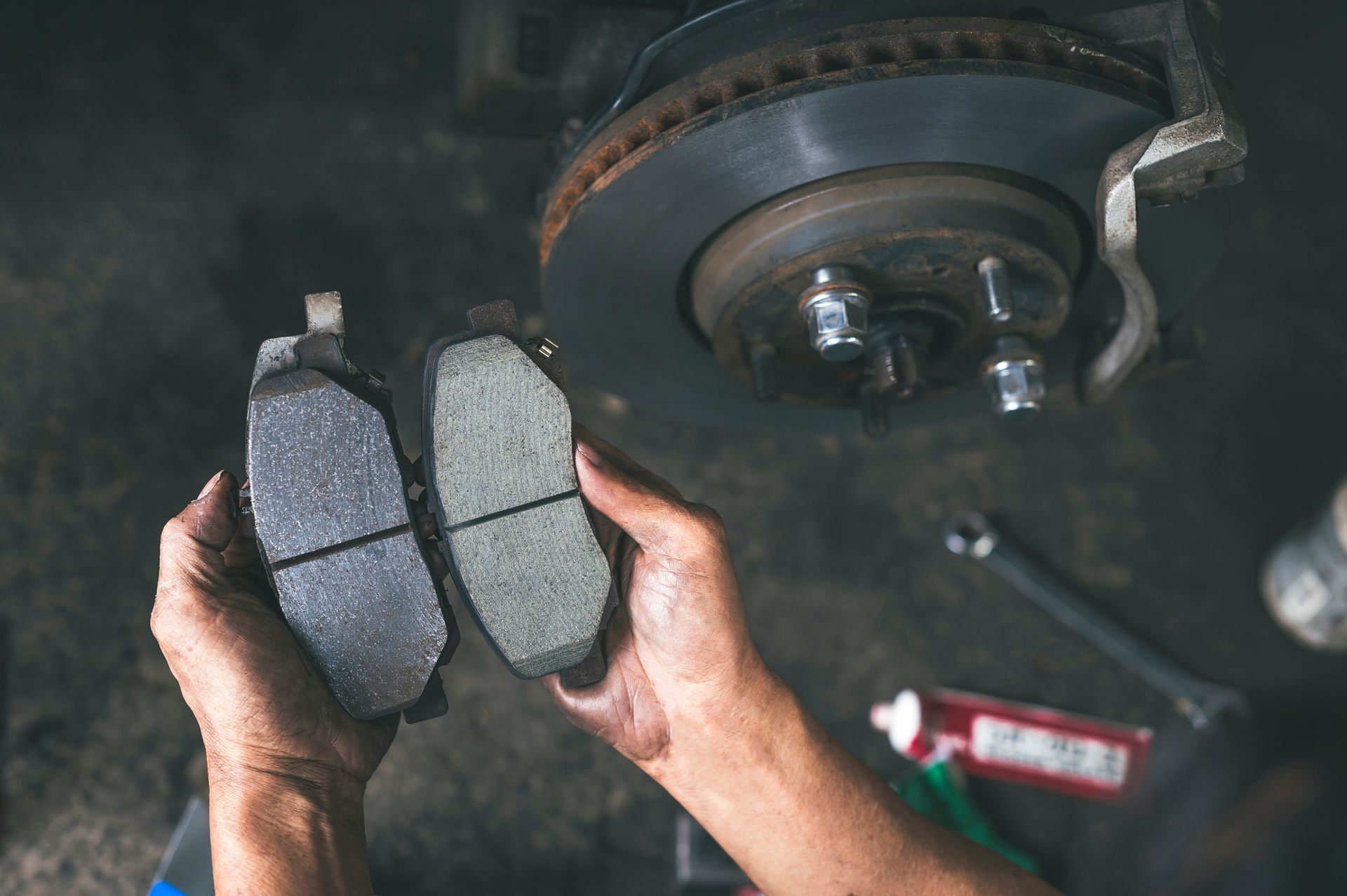
Brake wear often develops without an immediate grinding noise. Depending on the wheel design, a technician may be able to see part of the pad and rotor during the oil change. If the tires are rotated, removing the wheels allows a better comparison of the inner and outer pads.
Uneven pad thickness may indicate a sticking caliper, dry slide pins, damaged hardware, or a restricted brake hose. The technician may also notice deep rotor grooves, heavy rust, heat discoloration, or excessive brake dust around one wheel. These findings may lead to a more detailed brake inspection before friction material wears down to metal.
- Brake symptoms worth mentioning include:
- Consistent squealing
- Pulling during stops
- Pedal pulsation
- Steering wheel vibration
- A soft or low pedal
- A burning odor near one wheel
Sharing these details helps the technician connect visible wear with the behavior you experience on the road.
4. Cracked Belts, Weak Hoses, And Worn Rubber Parts
Drive belts operate components such as the alternator, water pump, and A/C compressor, depending on the vehicle. A belt may continue working while developing frayed edges, surface glazing, missing ribs, or contamination from an oil leak. Tensioners and pulleys may also show wobble or produce noise.
Cooling hoses can become swollen, brittle, overly soft, or cracked near clamps and fittings. Rubber axle boots, steering rack boots, and suspension bushings may show splits or separation as well. Finding damaged rubber during regular maintenance provides time to replace it before a hose bursts, a belt breaks, or exposed joints lose their protective grease.
5. Loose Suspension Or Steering Components
A technician working beneath the vehicle may notice damaged sway bar links, cracked control arm bushings, leaking shocks, broken springs, or torn ball joint boots. Hands-on testing may be needed to determine whether a joint has developed excessive movement.
Suspension and steering wear can cause clunking, wandering, uneven tire wear, or a vehicle that feels unsettled over bumps. Drivers often adjust gradually by making more steering corrections without realizing how much the handling has changed. Identifying looseness before an alignment or tire replacement helps prevent the new service from being undone by worn parts.
Why Early Findings Help Reduce Repair Costs
A small concern usually offers more repair options than a complete failure. A minor coolant leak may require a hose or fitting, while continued coolant loss could lead to overheating. Thin brake pads may be replaced before they cut into the rotors, and a damaged tire may be addressed before it loses pressure on the highway.
Not every finding needs immediate repair. The technician should explain which concerns affect safety, which could damage another component, and which can be watched until a later visit. Measurements, photographs, and written notes give you a clearer way to plan service instead of being surprised when several problems become urgent together.
Get Oil Change Service In Hilton Head Island, SC, With H & H Auto Service
H & H Auto Service in Hilton Head Island, SC, can replace your engine oil and filter while checking for leaks, tire damage, brake wear, aging belts and hoses, and visible suspension concerns.
Contact us to schedule an oil change visit and catch developing problems before they turn into larger repairs.